AC Not Cooling? A Florida Homeowner's Troubleshooting Guide
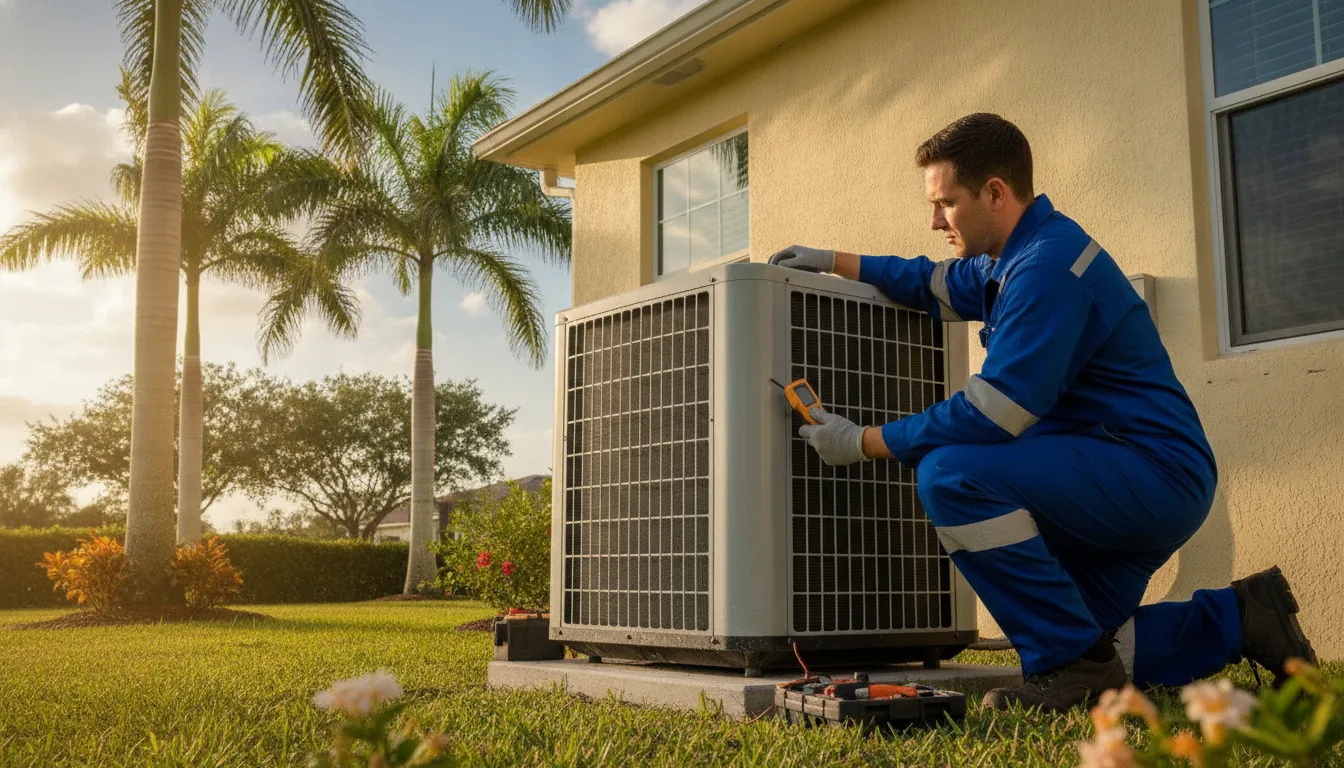
When your central air conditioner keeps running but the rooms stay warm, the system is telling you that something is wrong with cooling, airflow, or moisture removal. In Southwest Florida, high humidity can make the problem feel even worse. Leaving the house clammy and uncomfortable even when cool air seems to be coming from the vents.
The most common causes of an AC not cooling the home are a dirty air filter, an incorrect thermostat setting, blocked airflow at the outdoor unit. Low refrigerant, a frozen evaporator coil, or a system that is undersized for the space. You can safely check the thermostat, the filter, and the area around the outdoor condenser yourself. A refrigerant leak, a failed compressor, or a faulty air handler is a different matter: those need professional testing and repair rather than guesswork.
Before you reset the system repeatedly or assume your only option is a replacement, work through the symptoms in order. Pay attention to whether air is moving at the vents, whether that air actually feels cool, and how the house feels beyond the thermostat reading. Those details help you and a technician separate a quick fix from a real mechanical problem. And they explain why a running AC can still leave a Florida home hot and sticky inside.
Schedule an AC diagnostic today to find out why your system is not cooling
Why Is My AC Running But Not Cooling the House?
When homeowners say their AC is running, they may mean the indoor fan is blowing. The outdoor unit is making noise, or the system seems to cycle on normally. None of those observations prove that the system is actually removing enough heat from the house. Cooling requires more than air movement. The compressor must move refrigerant through the system, the indoor coil must absorb heat, and the air handler must deliver that cooled air through the ductwork.
That distinction explains why an AC can run for hours while rooms remain warm. A dirty filter can restrict airflow, so the system has difficulty moving enough air across the coil. Incorrect thermostat settings can also prevent the system from operating as intended. These are among the first basic checks recommended for a system that is running but not producing cold air. See the practical reset steps in our guide to resetting an AC that is not blowing cold air, but do not treat a reset as a repair if the problem returns.
Constant operation deserves more attention than a single uncomfortable afternoon. If the equipment runs continuously without lowering the indoor temperature, possible causes include a mechanical failure, a refrigerant leak, or an air-handler problem. A published medical-facility HVAC review also identifies those categories as possible explanations when air conditioning is not functioning properly: review the source. Refrigerant and electrical components should not be adjusted casually. A qualified technician needs to measure system performance and identify the failed part rather than guess from the sound of the equipment.
Cooling the air and removing humidity are different jobs
Southwest Florida adds another layer to the diagnosis. Your AC has to lower the temperature and remove moisture from the indoor air. Even when the thermostat shows a modest temperature, high humidity can make the house feel warmer, heavier, and less comfortable. Moisture also adds to the cooling load, making the system work harder. The EPA explains that air conditioners and dehumidifiers can reduce moisture in hot, humid climates, but they must be maintained properly: learn about moisture control from the EPA.
That is why an AC not cooling complaint in Fort Myers, Naples, the surrounding counties. Or the Florida Keys is often a diagnostic problem before it is a replacement problem. The right first step is to separate the symptom from the cause: check the thermostat, the filter, and the breaker. Then observe the outdoor unit and whether the system is moving air, producing a temperature change, and controlling indoor moisture. If those simple checks do not restore comfort, a repair-first diagnostic can determine whether the issue is airflow, refrigerant, controls, or another component.
6 Most Common Reasons Your AC Is Not Cooling
When your AC is running but not cooling, the cause may be a simple airflow problem or a mechanical fault that needs testing.
- Dirty air filter. A clogged filter restricts the air moving through the system, so less cooled air reaches your rooms and the equipment has to work harder. A dirty filter is one of the leading causes of an AC not cooling properly. Check the filter and replace it if it is visibly loaded with dust. If airflow remains weak afterward, the restriction may be deeper in the ductwork or air handler. Carrier identifies a dirty filter as a common cause of this symptom.
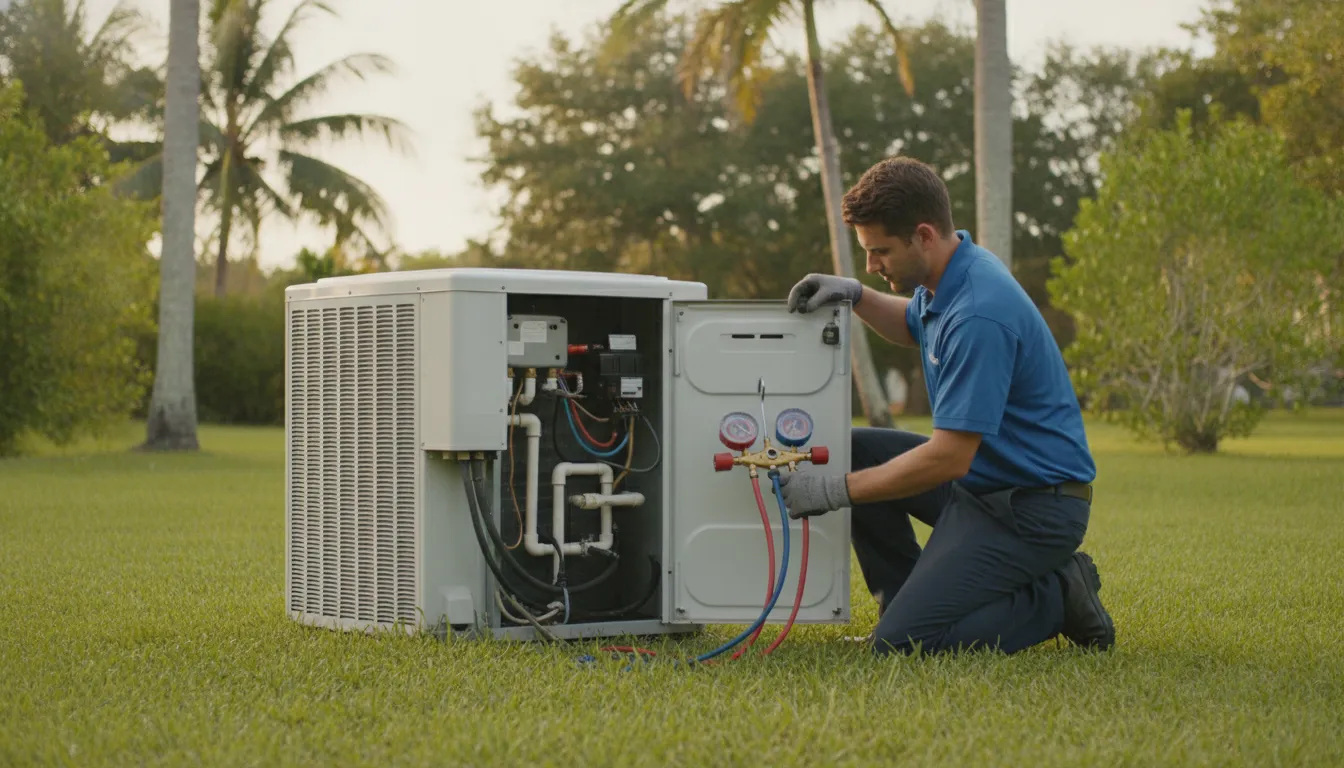
- Low refrigerant. Refrigerant is not something an AC normally uses up. A low charge usually points to a leak or a previous charging problem. The system may continue running while producing lukewarm air, icing up, or taking far too long to lower the temperature. Adding refrigerant without finding the cause can leave you with the same problem, so this diagnosis requires pressure and system testing.
- Frozen evaporator coil. A coil can freeze when airflow is restricted, the refrigerant charge is incorrect, or another component is not operating correctly. Ice may appear on the indoor coil or refrigerant line, but the visible ice is a symptom, not the underlying repair. Turn the system off and let it thaw rather than scraping the coil or continuing to run it. Repeated freezing should be professionally diagnosed.
- Thermostat settings or calibration. Confirm the thermostat is set to cool, the set point is below the room temperature, and the fan is not set to run independently when you expect cooling. Incorrect settings are a common primary cause of an AC running without delivering the comfort you expect. A thermostat that reads inaccurately or does not communicate with the equipment may need testing or replacement. Reviewing thermostat settings is an appropriate first check.
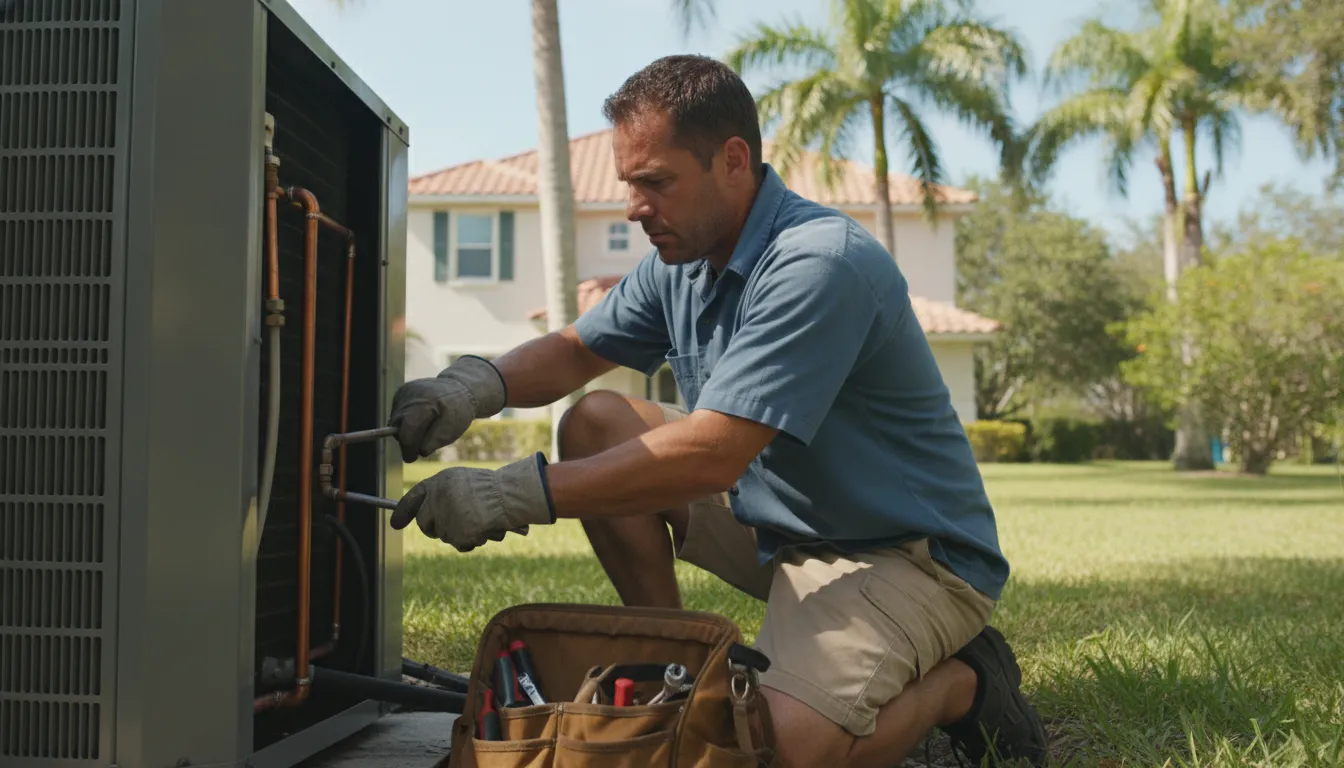
- Blocked outdoor condenser. The outdoor unit needs clear airflow to release the heat removed from your home. Leaves, grass, debris, a dirty coil, or an obstruction too close to the cabinet can reduce performance. With power left on and without opening the electrical panel, look for obvious debris around the unit and keep the surrounding area clear. A coil that is heavily dirty or damaged needs proper cleaning and inspection.
- An undersized system. In Southwest Florida, an AC must remove both heat and moisture. High humidity increases the cooling load, and an undersized unit may run for long periods without making the home feel comfortable. High humidity can make an undersized system work harder to remove moisture. If the system has always struggled, especially during hot, wet weather, have the equipment capacity, ductwork, and indoor humidity evaluated before assuming replacement is the only answer.
Mechanical faults, including an incorrect refrigerant charge or a failing compressor, can also make an AC run without cooling effectively. If the basic checks do not restore cooling, schedule a professional diagnostic appointment so the actual cause can be identified before a repair decision is made.
Why Florida Humidity Makes a Not-Cooling AC Feel Worse
In Southwest Florida, comfort depends on more than the number on the thermostat. Your air conditioner has two jobs: lower the air temperature and remove moisture. When either job falls behind, the house can feel hot and sticky even while cool air is blowing from the vents. That is why an AC not cooling problem often feels more severe during a humid Florida afternoon.
Humidity adds another job for the system
Warm, moisture-heavy air requires the air conditioner to work harder. The system must move heat out of the home while also pulling water vapor from the indoor air. High humidity increases that cooling load, and an undersized unit may struggle to keep up with both demands. The result can be a home that reaches a lower temperature slowly, runs for long periods, or still feels uncomfortable despite steady airflow. Carrier explains how high humidity can make an AC work harder and feel warmer when the system is undersized.
The basic moisture process happens at the cold indoor coil. As air cools, it can hold less moisture, so water vapor condenses on the coil and drains away. That principle is why a properly operating AC helps dehumidify the house as it cools. If airflow, coil temperature, runtime, or drainage is not working as it should, the system may lower the temperature without removing enough moisture.
Everyday moisture can push comfort in the wrong direction
Florida homes also gain moisture through normal activities. Showers, cooking, and bathing release water vapor indoors. Bathroom and kitchen exhaust fans should vent outdoors so that moisture does not remain in the living space or discharge into an attic. The EPA recommends using air conditioners and dehumidifiers in hot, humid climates while maintaining them properly, because poorly maintained equipment can create air-quality problems rather than solve them.
This matters throughout the South, where hot and wet conditions create a persistent moisture challenge. In Lee, Collier, Charlotte, and Monroe counties, a system that is marginally performing may seem to fail faster when outdoor humidity is high. A dirty filter, restricted airflow, or an equipment problem can reduce the runtime or coil performance needed for moisture removal. The air may feel cool at the register, but the rooms remain damp and warm.
Do not assume humidity alone means you need a larger system or a replacement. The right diagnosis starts with airflow, equipment condition, sizing, and moisture sources. Consistent maintenance helps an AC and any supplemental dehumidifier do their jobs effectively. If your home feels clammy or your system runs without bringing down the temperature, schedule a professional diagnostic so the temperature and dehumidification sides of the problem are checked together.
Step-by-Step Troubleshooting You Can Try at Home
If your air conditioner is running but the house still feels warm, start with the checks that are safe, visible, and easy to reverse. Work through these steps in order. They can identify an airflow or setting problem, but they cannot replace a professional diagnosis for refrigerant or electrical faults.
- Check the thermostat settings. Confirm the system is set to Cool, not Fan or Off, and lower the set point a few degrees below the current room temperature. Make sure the fan setting is not creating confusion about whether the compressor is actually cooling. If the thermostat display is blank, check whether its batteries need replacement. Incorrect thermostat settings are among the common reasons an air conditioner runs without maintaining the desired temperature. Carrier's troubleshooting guidance also recommends beginning with this basic check.
- Inspect the air filter. Turn the system off, then locate the return-air filter. If it is visibly gray, clogged with dust, or difficult to see through, replace it with the correct size and airflow rating for your system. A dirty filter restricts air movement and is a leading cause of an AC running but failing to cool adequately. After installing the new filter, allow the system time to run and check whether airflow improves at the supply vents.
- Clear the outdoor condenser. Look around the outdoor unit for leaves, grass, weeds, stored items, or other debris blocking the cabinet. Keep a safe distance from the fan and do not remove panels or reach inside. Clear only loose material you can safely remove by hand with the system off. Restricted airflow at the condenser can reduce performance, especially during Southwest Florida's hot, humid weather.
- Look for a frozen indoor coil. Check for ice on the refrigerant lines near the indoor air handler or for frost visible around the coil area. If you see ice, turn the cooling system off and set the thermostat fan to On only if air is moving normally. Do not chip at the ice. Restore airflow by replacing a dirty filter, then allow the coil to thaw completely. Ice can point to restricted airflow or a mechanical issue, so recurring frost needs professional attention.
- Try the quick reset. For a simple reset sequence, follow the instructions in this AC reset guide. Give the system a short period to restart and reassess the air from the vents. A reset may clear a temporary control issue, but it will not repair a refrigerant, compressor, or other mechanical fault.
- Know when to stop. Stop troubleshooting and schedule service if the unit continues running without cooling, repeatedly freezes. Trips a breaker, makes unusual noises, leaks water, or has weak airflow after the filter change. Mechanical faults, including an incorrect refrigerant charge or faulty compressor, can make an AC run while it fails to cool effectively. Do not open electrical panels or attempt refrigerant work. Those repairs require proper tools, testing, and training.
Simple checks can restore airflow, but persistent AC not cooling symptoms deserve an accurate diagnosis rather than repeated resets or guesswork.
When You Should Call a Professional AC Technician
Some checks are reasonable for a homeowner, such as confirming the thermostat is set to cool, replacing a clogged filter, and checking whether a breaker has tripped. But if your AC is not cooling after those basic steps, continuing to experiment can turn a manageable repair into a more expensive one. Call a qualified technician when the symptom points to a sealed-system, electrical, or airflow problem.
| You can safely handle | Call a professional |
|---|---|
| Check the thermostat is set to Cool and the set point is below room temperature | System won't cool on either Heating or Cooling |
| Replace a visibly clogged disposable air filter | Low refrigerant or a suspected leak |
| Clear loose leaves and debris around the outdoor condenser with the system off | Repeatedly frozen indoor coil |
| Confirm the outdoor unit has power and the breaker has not tripped | Constant cycling, unusual noises, or water leaks |
| Check that supply registers and return grilles are unobstructed | Suspect a failing capacitor, compressor, or air-handler fault |
The system may be low on refrigerant
If the air conditioner runs but the air never gets properly cold, low refrigerant or a refrigerant leak is one possibility. Refrigerant work requires the right tools, testing, and licensed handling. Adding refrigerant without finding the cause does not solve the underlying problem. A technician should check the charge, inspect for leaks, and explain the repair before doing the work.
A frozen coil keeps coming back
Turn the system off if you see ice on the indoor coil or refrigerant lines, and let it thaw. You can check the filter and airflow once the ice is gone. If the coil freezes again, stop resetting it and schedule service. Repeated freezing can point to restricted airflow, a refrigerant problem, or another fault that needs measurements rather than guesswork.
Constant cycling or nonstop operation is not normal
An AC that starts and stops repeatedly without cooling, or runs nearly constantly while the home remains warm, deserves professional diagnosis. Mechanical failure, a refrigerant issue, or an air-handler problem can produce this pattern. Research on air-conditioning performance also identifies incorrect refrigerant charge and faulty compressors as faults that can leave a system running without effective cooling. Clinical research on air-conditioning system faults and performance research on vapor-compression systems provide useful technical context.
Florida comfort problems may involve system sizing
In Southwest Florida and the Keys, a home can feel hot and sticky even when the thermostat temperature seems close. High indoor humidity increases the cooling load, and an undersized system may struggle to remove both heat and moisture. That is a design and diagnostic question, not a reason to jump straight to replacement. Schedule a professional diagnostic so the technician can evaluate the actual cause and discuss repair options first.
5 Star Air takes a repair-first, transparent approach. The goal is to identify the failed component and recommend a fair fix when repair makes sense, without pressure to replace a workable system. Same-day availability and 24/7 emergency service are available when conditions cannot wait. Service in the Florida Keys may carry premium pricing because of travel and logistics, and that cost should be explained upfront.
How Regular Maintenance Prevents AC Not Cooling Problems
In Southwest Florida, maintenance is not just about keeping an air conditioner efficient. It helps the system move enough air, remove moisture, and reveal small problems before they become a hot-room emergency. A unit can run continuously and still leave the house uncomfortable when airflow is restricted or a component is beginning to fail.
Change filters before airflow suffers
A dirty filter makes the blower work against resistance and reduces the amount of conditioned air reaching your rooms. Coolray reports that dirty filters can reduce airflow by up to 15%. And notes that an AC unit that has gone more than a year without service may need professional maintenance: Coolray's AC troubleshooting guidance. The right replacement schedule depends on the filter, system, household, and indoor air conditions. Check the filter regularly, follow its airflow-direction arrow, and replace it when it is visibly loaded or according to the manufacturer's guidance.
Keep the outdoor condenser clear
The outdoor condenser needs unobstructed airflow to release heat. Keep leaves, grass clippings, stored items, and dense plant growth away from the cabinet and its intake. Inside the home, avoid blocking supply registers with furniture and keep return grilles open. The EPA recommends improving air circulation and maintaining clear airflow as part of moisture control: see its guidance on controlling moisture in the home.
Do not open electrical panels or try to wash internal components yourself. A clear yard does not rule out a failing capacitor, restricted coil, refrigerant problem, or other mechanical issue. It simply removes one common source of unnecessary strain.
Schedule a yearly tune-up, especially in Florida
An annual professional visit gives a technician a chance to inspect electrical connections, airflow, coils, condensate drainage, and operating performance. ENERGY STAR recommends routine HVAC maintenance and regular filter care to support efficient operation: review its heating and cooling maintenance guidance. In a Florida home, that inspection also matters for dehumidification. The EPA recommends using and maintaining air conditioners in hot, humid climates so they reduce moisture without becoming sources of biological pollutants.
Humidity adds to the cooling load, so a system may feel inadequate even when the thermostat shows a reasonable temperature. Maintenance cannot correct an undersized system or every design problem, but it can help the equipment perform its intended temperature and moisture-removal work. Bathroom and kitchen exhaust fans should vent outdoors, not into an attic or another enclosed space, to reduce moisture entering the home.
At 5 Star Air, maintenance is part of an honest diagnostic process, not a reason to recommend replacement automatically. If your AC is not cooling, we start with the condition of the system and explain what we find. Sometimes the answer is a filter or airflow correction. When a repair is needed, you should receive a clear path forward and transparent pricing before work begins.
Schedule your professional AC diagnostic before you keep guessing
Frequently Asked Questions
Why is my AC running but not cooling the home?
Start with the simple possibilities: an incorrect thermostat setting, a clogged air filter, blocked airflow, or a problem at the outdoor unit. If those checks do not restore cooling, the cause may be a refrigerant issue, frozen coil, air-handler fault, or compressor problem that requires professional diagnosis.
What should I check first when my AC is not blowing cold air?
Confirm the thermostat is set to Cool, the set point is below the room temperature. And the fan is not set to On if you want it to cycle automatically. Then inspect the filter and verify that the outdoor unit has power and clear space around it. Do not open electrical panels or handle refrigerant.
Can a dirty air filter cause my AC to stop cooling?
Yes. A heavily restricted filter reduces airflow across the indoor coil. That can limit cooling and may contribute to coil icing. Replace a disposable filter with the correct size and rating, then allow the system to thaw if ice is present. Persistent icing points to an airflow or mechanical problem.
How does Florida humidity affect AC performance?
Humidity adds moisture that the system must remove while it cools the air. Showers, cooking, poor ventilation, and an undersized unit can increase that load. As a result, the home may feel clammy even when the thermostat temperature looks reasonable. Exhaust bathroom and kitchen moisture outdoors and have the system evaluated if indoor humidity stays high.
Is it normal for an AC to run constantly without cooling?
No. Long run times can occur during extreme Southwest Florida heat, but constant operation without reaching the set temperature deserves attention. Low refrigerant, a failing compressor, restricted airflow, duct leakage, or another fault may be responsible. Turn the system off if you see ice, hear unusual noises, or notice water near the equipment, and arrange a diagnostic visit.
Ready to Get Your AC Cooling Again?
If your central AC is running but the home still feels hot or humid. A professional diagnostic can separate a simple airflow issue from a repair that genuinely needs attention. A technician can check the refrigerant charge, test the compressor and controls, measure airflow, and evaluate whether sizing or humidity removal is part of the problem.
5 Star Air takes a repair-first, transparent approach. We aim to identify the failed component and recommend a fair fix when repair makes sense. Without pressure to replace a system that could be brought back to good condition. Same-day availability and 24/7 emergency service are there when you cannot wait.
Schedule a same-day AC diagnostic with 5 Star Air to get your home comfortable again. Prefer to talk it through? Reach our Southwest Florida team at (239) 282-2222.