Marine AC Repair Keys: Boat & Yacht Cooling
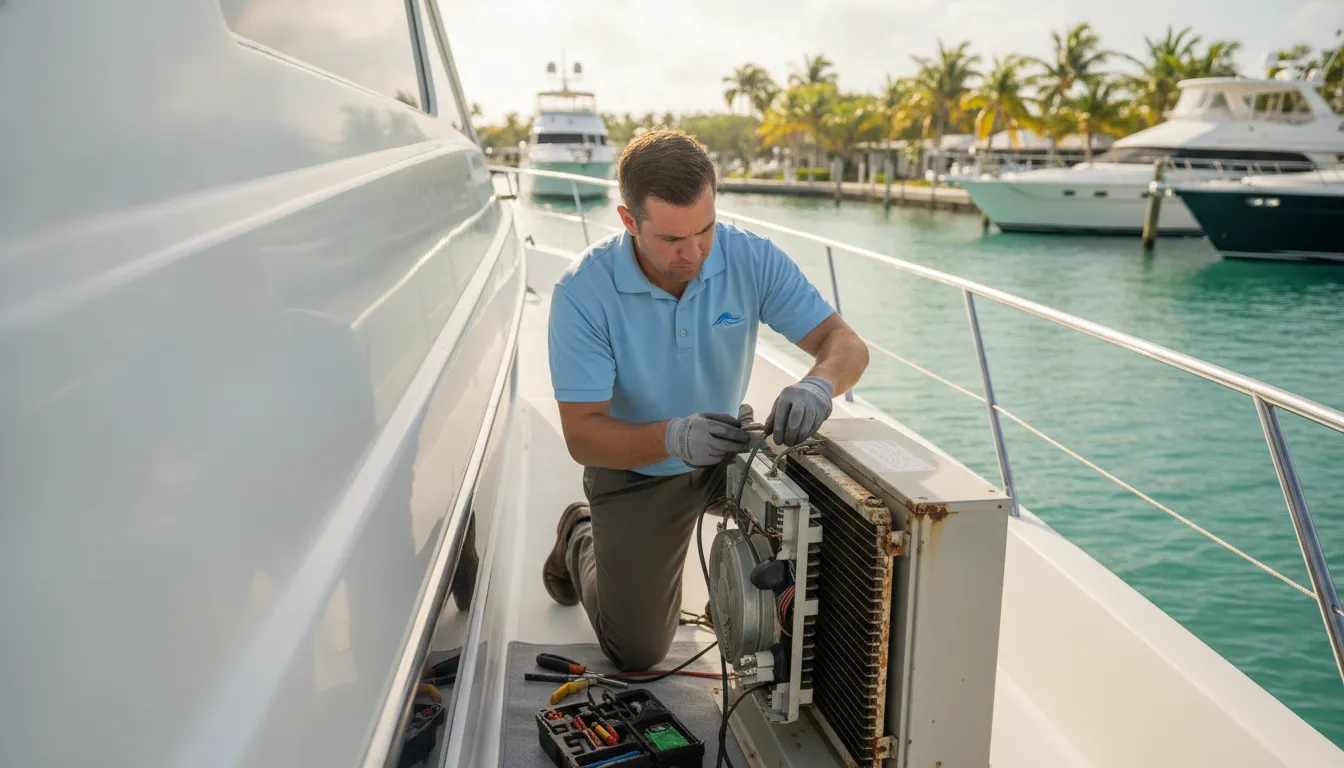
Cooling trouble on a boat rarely stays a small inconvenience in the Florida Keys. Salt-heavy air, constant humidity, and demanding operating conditions can accelerate wear on coils, pumps, electrical connections, and other components. A system that seems mildly underperforming today may leave a cabin uncomfortable, damp, or unusable when you need it most.
Reliable marine ac repair keys service starts with diagnosing the complete system, not simply adding refrigerant or replacing a part. In the Keys, that means checking corrosion, seawater flow, equipment condition, and whether the installation fits the marine environment. Salt-air-resistant equipment selection and proactive maintenance are especially important for boats and coastal properties, where corrosion can degrade cooling components faster than in typical residential settings. Learn about our marine HVAC expertise.
The right repair plan depends on what is happening below the surface. Understanding why marine cooling systems fail quickly makes it easier to recognize warning signs, protect your equipment, and decide when professional service is warranted.
Schedule your marine AC repair in the Florida Keys today. Our repair-first team diagnoses the complete system and handles boats, yachts, and coastal properties across the Keys.
Marine AC Repair in the Keys: Why Boat Cooling Fails Fast
Boat air conditioning works in an environment that is unusually hard on cooling equipment. In the Florida Keys, salt air reaches exposed coils, electrical connections, fasteners, housings, and seawater components. Salt residue holds moisture against metal, so corrosion can continue even when a boat is closed up between trips. That is why marine AC repair requires more than treating a unit like a small residential system. The equipment, installation, and maintenance plan all have to account for the marine environment.
Salt air attacks more than the visible cabinet
Early corrosion may appear as discoloration or surface oxidation, but the more important damage can develop at connection points and inside components. Corroded terminals create electrical resistance and unreliable operation. Deteriorating coils can reduce heat transfer, while damaged housings and fasteners make future service more difficult. Marine air conditioning systems in coastal environments such as the Keys require specialized maintenance because salt air is highly corrosive. Marine AC repair guidance for Key Largo also emphasizes the specialized knowledge needed for these systems.
Electrolysis can accelerate component damage
Electrolysis is another concern when dissimilar metals, saltwater, and electrical current interact. The result can be accelerated deterioration of underwater or seawater-connected parts, including fittings and other components in the cooling circuit. A system may still run while this damage develops, which makes routine inspection important. If a pump, connection, or seawater-side component is repeatedly failing, the right question is not only which part to replace. A technician should also look for the environmental or electrical condition contributing to the failure.
Heat and humidity keep the system under load
Keys weather adds a constant cooling challenge. High outdoor temperatures make the condenser work harder to release heat, while heavy humidity increases the need for moisture removal inside the cabin. When doors open frequently, windows are not well sealed, or several cabins need cooling at once, the unit may run for long periods with little recovery time. That extended runtime exposes weak airflow, fouled coils, marginal electrical connections, and seawater-side restrictions sooner than occasional use would.
For that reason, marine HVAC equipment in the Florida Keys should be selected with rapid salt-air corrosion in mind. And maintenance should be proactive rather than limited to emergency breakdowns. Marine AC and refrigeration services should begin with an honest inspection of the failure, the surrounding conditions, and the equipment's remaining serviceability. Repair-first troubleshooting helps identify what actually needs attention before anyone recommends replacement.
How Marine Air Conditioning Differs from Residential
A marine air conditioner may look familiar, but the system works in a far less forgiving environment than a typical home unit. A boat or yacht moves, vibrates, draws power from a different electrical system, and sits in salt-heavy air. Many marine systems also use seawater to carry heat away from the condenser. Those conditions change how technicians diagnose problems, select replacement parts, and plan maintenance.
That distinction matters when you need marine AC repair in the Florida Keys. A residential HVAC checklist alone may miss a restricted seawater circuit, galvanic corrosion, or an electrical issue caused by limited onboard power. The comparison below shows why marine service requires equipment knowledge as well as standard refrigeration skills.
| System factor | Marine air conditioning | Residential air conditioning |
|---|---|---|
| Condenser cooling | Often transfers heat through a seawater circuit, pump, hose, and discharge path. | Usually rejects heat to outdoor air through an air-cooled condenser and fan. |
| Strainers and filters | Needs a seawater strainer or filter to keep marine growth, sand, and debris from restricting flow. | Uses air filters and coil maintenance; there is normally no seawater intake circuit. |
| Power supply | May run from 12V controls, an inverter, shore power, a generator, or a hybrid arrangement. | Typically connects to a stable 120V household electrical system, with standard breaker protection. |
| Corrosion protection | Requires materials, coatings, connections, and inspection practices suited to salt air and possible electrolysis. | Still needs protection from moisture, but is not continuously exposed to a saltwater marina environment. |
| Installation environment | Must tolerate vibration, movement, confined access, changing trim, and the boat's operating conditions. | Is installed on a fixed structure with comparatively stable mounting, drainage, and service clearances. |
These differences also affect the meaning of common symptoms. A warm cabin could indicate a refrigerant problem, but it could also result from a clogged strainer, weak seawater pump, damaged impeller, or poor discharge flow. Repeated corrosion may point to more than ordinary wear, especially when dissimilar metals or electrical faults are involved. A qualified technician should inspect the complete cooling and power path before recommending a replacement.
For Florida Keys boats and coastal properties, salt-air-resistant equipment selection and proactive maintenance are part of reliable cooling, not optional extras. Marine work should be handled by technicians who understand both refrigeration fundamentals and the vessel's operating environment.
Common Marine AC Problems in Saltwater Marinas
Marine air conditioning systems work in a demanding environment. Warm, humid air, salt spray, vibration, and limited equipment access can turn a small restriction into a complete cooling failure. In the Florida Keys, specialized marine AC knowledge matters because salt air accelerates corrosion and affects components that would last much longer in a residential system. Marine AC service in coastal environments requires attention to both the refrigeration circuit and the seawater side of the unit.
Restricted seawater flow
A clogged seawater strainer is one of the first places to look when a system runs but does not cool properly. The strainer can collect sea grass, sand, plastic, shells, and other marina debris. Barnacle growth can also narrow the intake or discharge path. When water flow drops, the condenser cannot release heat efficiently. The unit may shut down on a high-temperature safety, cycle repeatedly, or blow air that feels only slightly cooler than the cabin.
A seawater pump can create similar symptoms. A failed motor, damaged seal, seized bearing, or worn impeller may prevent adequate flow even when the strainer appears clean. Impellers can lose flexibility over time, especially when a boat sits unused and the rubber dries or deforms. A technician should verify actual flow and inspect the pump and impeller rather than replacing a control board based only on an error code.
Refrigerant loss and corrosion damage
Low refrigerant usually indicates a leak, not a condition that should be solved by repeatedly adding refrigerant. Salt exposure can corrode coils, fittings, tubing, and housings. Vibration and movement can add stress at joints. A system with low charge may cool briefly, then lose capacity, ice over, or run for long periods without reaching the thermostat setting. Proper marine AC repair includes leak testing, identifying the damaged component, and handling refrigerant according to EPA requirements.
Corrosion may be visible as pitting, flaking metal, green residue, or weakened fasteners, but damage is not always obvious from the outside. Electrical connections and control components are also vulnerable. Saltwater intrusion, poor bonding, stray current, and electrolysis can damage terminals, pumps, coils, and housings. Replacing one corroded part without checking the electrical and bonding conditions can lead to another failure.
When the symptoms point to a larger problem
Weak airflow, unusual pump noise, repeated safety shutdowns, warm discharge water, and a musty cabin odor can have more than one cause. Do not open a seawater circuit or refrigerant circuit while the system is operating. Shut it down if there is a burning smell, leaking water near electrical components, or rapid icing, then arrange an inspection. A repair-first technician can trace flow, electrical condition, corrosion, and refrigerant charge in the right order instead of guessing at the most expensive component.
Marine AC Maintenance in the Keys: A Proactive Checklist
Salt air, humidity, and constant exposure to seawater make a marine cooling system work in a demanding environment. A routine inspection is more than a quick filter change. It should address the seawater circuit, air side, electrical connections, and refrigeration components before a small restriction or corroded connection becomes a loss of comfort onboard. This checklist is a practical starting point for owners and operators, while refrigerant and electrical work should be handled by a qualified marine HVAC-R technician.
- Flush and clean the seawater strainer. Shut down the system safely, then inspect the strainer for shells, grass, silt, and other debris that can restrict seawater flow. Clean the basket and housing, check the lid and gasket, and confirm that the seacock and intake path are open. A restricted strainer can reduce heat transfer and make the system appear to have a larger cooling failure.
- Clean the evaporator coil and drain pan. Remove dust, salt residue, biological buildup, and other contaminants from the evaporator coil and drain pan using methods appropriate for the equipment. Research on marine air conditioning maintenance specifically identifies these components as areas requiring decontamination in humid, salty conditions. A clean drain pan also helps reduce standing moisture and related odors. See the documented maintenance process for evaporator coil and drain pan decontamination. Where appropriate, a technician can evaluate germicidal or UV treatment directed at the coil and drain-pan area to support air quality in closed marine spaces.
- Inspect the seawater pump and impeller. Check the pump for leaks, unusual noise, weak flow, and signs of overheating. Inspect the impeller for cracking, brittleness, missing vanes, or wear, and replace it when its condition or service interval calls for replacement. Always confirm that fragments from a failed impeller have not moved downstream and restricted the cooling circuit.
- Check anodes, wiring, and signs of electrolysis. Examine sacrificial anodes and replace depleted components before they stop protecting connected metal. Look for green or white corrosion, pitting, loose terminals, damaged insulation, and overheated connections. Electrolysis can progress out of sight, so unexplained corrosion deserves a proper electrical and bonding evaluation rather than cosmetic cleaning alone.
- Verify refrigerant charge and operating performance. Record supply-air temperature, return-air temperature, airflow, and operating pressures as appropriate. A low charge may indicate a leak, not simply a need to add refrigerant. Refrigerant diagnosis and recovery should be performed by an EPA-certified technician using the correct equipment and procedures.
- Schedule a seasonal inspection before the hottest months. Arrange service before peak summer demand, when boat occupancy and outdoor heat leave less room for downtime. A proactive program is especially valuable in the Florida Keys, where salt-heavy air accelerates wear on cooling components. Document the service date, observed condition, parts replaced, and any follow-up recommendation so the next inspection starts with a useful history.
Regular marine AC maintenance does not eliminate every failure, but it makes restrictions, corrosion, contamination, and worn parts easier to find while they are still manageable. That is the repair-first approach: inspect the actual system, explain what needs attention, and prioritize the work that protects reliable cooling.
Vacation Rental Owners vs. Year-Round Keys Residents
The right marine cooling routine depends on how often the boat is occupied, how quickly it must be ready, and what happens while it sits unused. A vacation rental or charter vessel may have a narrow window between guests. While a year-round resident usually cares most about dependable comfort, reasonable operating costs, and early warning of equipment trouble. Both need maintenance suited to salt air, but the priorities are different.
For vacation rentals and charter boats
Guest turnover makes a working air conditioning system part of the handoff process. A cabin that is warm, damp, or musty can create complaints before the next reservation even begins. Owners and operators should check cooling performance, airflow, drain operation, and unusual odors during every turnover or scheduled inspection. This is especially important when a system has been idle between trips.
Idle periods can allow salt residue, moisture, and organic contaminants to collect around components and drainage areas. In a humid marine environment, that buildup can contribute to odors and restricted airflow when the system is started again. Cleaning the evaporator coil and drain pan is a documented part of marine system decontamination, and professional maintenance can help identify contamination before it affects the guest experience. Research on marine air conditioning maintenance describes these components as key areas for cleaning and indoor air quality control.
Rental owners should also keep service records tied to the vessel and schedule preventive checks before the busiest season. That approach is more practical than waiting for a failure during a full booking calendar. If a unit struggles to cool, trips a breaker, leaks, or develops a persistent odor. Arrange marine AC repair before the next guest arrives instead of relying on a quick reset.
For year-round Keys residents
Residents use their systems through sustained summer heat, so gradual performance loss matters. Longer run times, uneven cooling, rising power use, or increasing humidity can signal restricted airflow, drainage problems, corrosion, or a refrigeration issue. A system that still produces some cold air may already be working harder than it should.
Year-round owners benefit from a predictable maintenance schedule that includes inspection of salt-exposed equipment, drainage, coils, and seawater-side components where applicable. Equipment selection also matters. Marine systems and related cooling equipment should be chosen with the Florida Keys environment in mind, including resistance to rapid corrosion in salt-heavy air. Marine AC and refrigeration services can help owners evaluate repair and maintenance needs without treating every symptom as a replacement project.
Whether the boat serves guests or a household, the practical rule is the same: match inspections to use. Address moisture and odor early, and use a technician who understands marine conditions rather than treating the system like a standard home unit.
Choosing Marine AC Repair in the Florida Keys
Marine air conditioning is not a job for a technician who only knows residential equipment. A boat or coastal property exposes cooling components to salt-heavy air, humidity, vibration, and operating conditions that can accelerate corrosion. When you compare marine AC repair providers in the Keys, look for technical qualifications and local experience before you compare a quoted price.
Verify certifications and licensing
Ask whether the technician assigned to the work is NATE-certified and EPA-certified for refrigerant handling. NATE certification indicates tested HVAC knowledge, while EPA certification is required for the proper handling of regulated refrigerants. These credentials do not replace practical marine experience, but they provide an important baseline for safe, competent service. The technician should also have licensed HVAC-R experience, including refrigeration knowledge relevant to marine systems. A provider that cannot clearly explain who will perform the work, what credentials they hold, and how refrigerant will be handled deserves a closer review.
Marine systems may also involve seawater circulation, strainers, pumps, corrosion, and equipment installed in tight or difficult-to-access spaces. A technician who understands only the air-side portion of a system may miss the cause of a recurring failure. Ask specifically about experience servicing boat and yacht air conditioning, not simply air conditioning in waterfront homes.
Choose coverage that fits the Keys
Local coverage matters when equipment is on a boat, at a marina, or on a remote island. Confirm that the company regularly serves the Florida Keys, including the community where the vessel or property is located. A regional operation with dedicated Keys coordination can plan travel, parts, and access more realistically than a provider treating the job as an occasional out-of-area call.
Emergency availability is another practical consideration. Cooling failures can quickly affect comfort, guests, electronics, and other onboard systems. Look for a provider offering 24/7 emergency service and ask what response expectation applies to your location. 5 Star Air documents a two-hour response-time target for emergency service, subject to the realities of the call and location.
Expect clear pricing and a repair-first process
A trustworthy provider should explain the diagnostic process, labor, materials, travel considerations, and recommended repair before work begins. Transparent upfront pricing helps you make a decision without surprise fees or pressure to replace equipment unnecessarily. Repair-first service is especially valuable when a marine unit has a fixable pump, electrical, airflow, or refrigerant issue.
Review the company's marine air conditioning and refrigeration experience, then ask direct questions about certifications, Keys coverage, emergency response, and the proposed repair. Clear answers are a useful sign that the provider understands both the equipment and the environment.
Book your Florida Keys marine AC service now. Whether your boat, yacht, or waterfront property needs troubleshooting, maintenance, or installation, schedule a visit before the next hot spell.
Frequently Asked Questions
How often should marine AC systems be serviced in the Florida Keys?
Schedule a preventive inspection at least once a year, and consider more frequent service for boats kept in the water year-round or used heavily. Salt air, humidity, and marina conditions can accelerate corrosion and contamination. A technician should inspect the seawater circuit, strainers, pump, coils, drain pan, electrical connections, and refrigerant performance before small restrictions become cooling failures.
How is marine air conditioning different from a home system?
Marine systems must operate around saltwater, limited space, vibration, and boat-specific power constraints. Many use seawater circulation to reject heat, so a clogged strainer, failed pump, or damaged impeller can stop cooling even when the refrigeration circuit is intact. Equipment selection and corrosion protection also matter more than they do in a typical inland home.
What are the signs that a boat AC system needs repair?
Weak airflow, warm discharge air, unusual pump noise, repeated breaker trips, water around the unit. Foul odors, or an air conditioner that runs continuously are all reasons to schedule an inspection. Do not keep resetting a tripped breaker or running a pump that may be starved of water. Shut the system down and have the cause diagnosed.
What should I look for in a marine AC technician?
Choose a licensed HVAC-R professional with direct marine experience, transparent pricing, and the right refrigerant credentials. 5 Star Air states that its technicians are NATE-certified and EPA-certified for refrigerant handling. See the company background and service standards at 5 Star Air's about page.
Can marine AC problems be handled as an emergency?
Yes. A failed system can quickly affect comfort, humidity control, and onboard equipment, especially during hot Keys weather. 5 Star Air offers 24/7 emergency service with a documented two-hour response target for the region, subject to access and job conditions. Request service through the online scheduling page.
Schedule Marine AC Repair for Your Keys Property
Reliable cooling helps protect comfort on the water and in coastal spaces where salt air places extra demands on marine equipment. Our repair-first approach keeps the next step clear, whether your boat, yacht, or property needs troubleshooting, maintenance, or installation guidance. Schedule a marine AC repair online, or call 5 Star Air at (305) 500-5555 to discuss the service you need.