Why Is My AC Blowing Warm Air? 6 Causes & Fixes
Walking into a hot home on a humid afternoon is a true Southwest Florida emergency. When the temperature indoors matches the sticky air outside, you need a quick fix that lasts.
An ac blowing warm air is often caused by a dirty air filter that blocks airflow and freezes the evaporator coils. Other common causes include a thermostat set to 'fan' instead of 'auto', a failed capacitor, or a refrigerant leak. Some issues like a wrong setting are simple DIY tasks, but complex electrical faults or low refrigerant levels require a professional technician. Running your system in this state can damage the compressor and cause expensive parts to fail completely. In the extreme heat of Southwest Florida, a quick response is vital. Finding the root cause quickly will save you money, protect your equipment, and restore comfort to your home before the indoor heat becomes dangerous.
Need cool air fast? Schedule AC repair online or call our licensed technicians at (239) 282-2222 for 24/7 emergency service across Lee, Collier, and Charlotte counties.
You might wonder how a system built for cold air can suddenly start heating your rooms instead. To find the root of the problem, we must first look at How Your AC Blowing Warm Air Points to the Cooling Cycle. Here is how your system is designed to work.
How Your AC Blowing Warm Air Points to the Cooling Cycle
To know why your system fails, you must know how it works. A home AC does not make cold air; instead, it moves heat from inside your house to the outdoors. This step depends on a steady loop known as the cooling cycle. When any part of this cycle fails, you will find your ac blowing warm air instead of a cool breeze.
The role of indoor and outdoor coils
The cooling cycle has three main parts. First, the indoor evaporator coil absorbs heat from your rooms while a compressor pump sends this heat to the outdoor unit. Finally, the outdoor condenser coil releases the heat into the humid air. A blower fan then pushes the cooled air back into your home through the vents.
If any of these parts stop working, the loop breaks. Heat will build up inside your home. The fan will keep blowing, but the air will feel warm. Finding where the cycle is broken is the key to fixing your cooling system.
Why low refrigerant stops the cycle
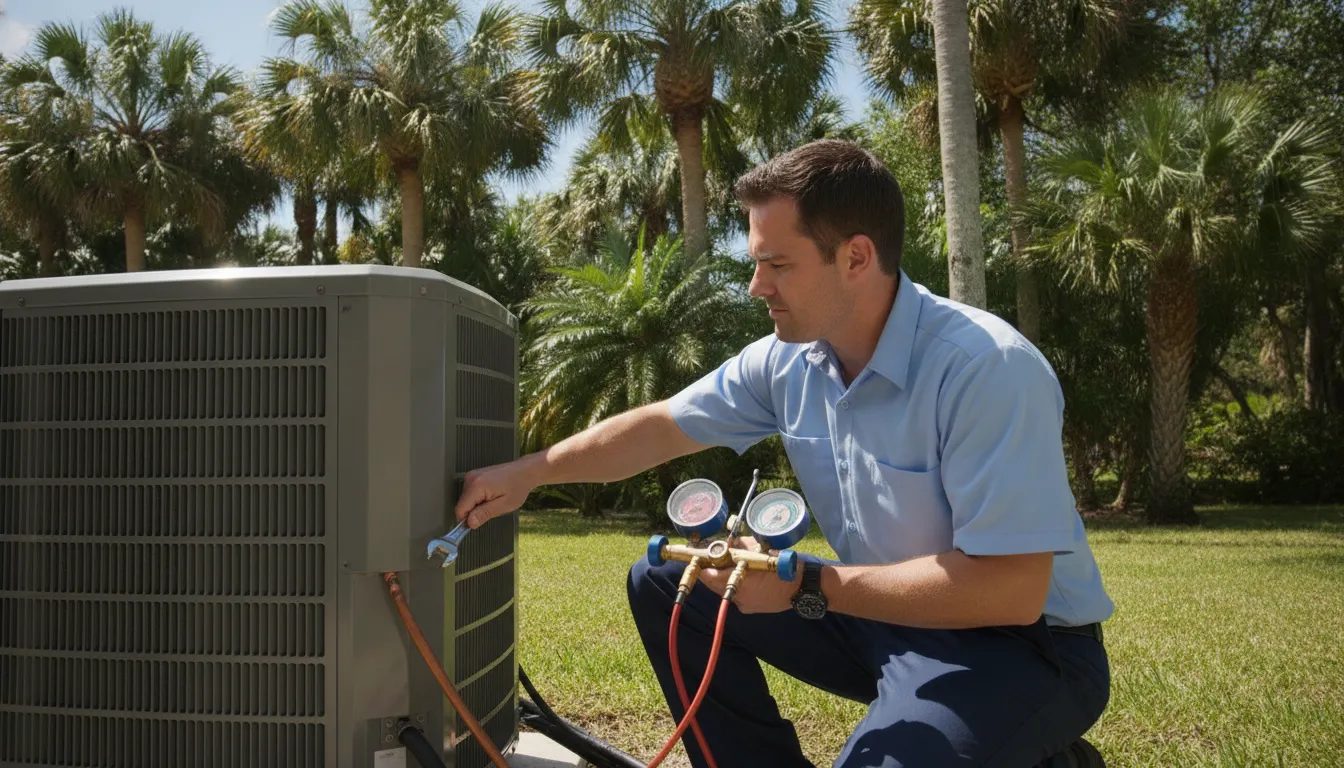
Refrigerant is the special fluid that flows through the coils as the heart of the cooling cycle. Its main job is to absorb and carry heat away from your living space. When refrigerant leaks out, the system cannot hold enough fluid to do this work. A U.S. AC guide shows that low levels make it hard to remove heat, causing warm air to blow.
A leak is often the root cause of this drop because, unlike a car, a home AC does not consume refrigerant like gas. The same fluid should stay inside the closed system forever. If the fluid level is low, it means you have a tiny hole in your copper lines. You will need an urgent air conditioner service to find and patch the leak.
How dirty coils trap heat
Coils must stay clean to do their job. As air passes over the indoor coil, dust can build up on its metal surface over time. This layer of dirt acts like a blanket, blocking the heat from reaching the cold fluid inside the coil. This issue slows down the cooling step and leaves warm air in your vents.
When coils are coated in grime, heat transfer slows down. The U.S. cooling guide notes that dirty coils reduce heat transfer and force the system to struggle. This buildup puts heavy strain on your compressor pump, which can burn it out for good over time. Booking a regular professional AC tune-up keeps these parts clean so the cycle works well.
Why Is My AC Blowing Warm Air? Start With Airflow and Thermostat Checks
If your home feels hot, you may wonder what is wrong. It can be stressful when you feel warm air coming out of your vents. But you do not always need a major repair. Some common causes are simple to find and fix on your own. You should check two main parts of your system first.
The Clogged Air Filter
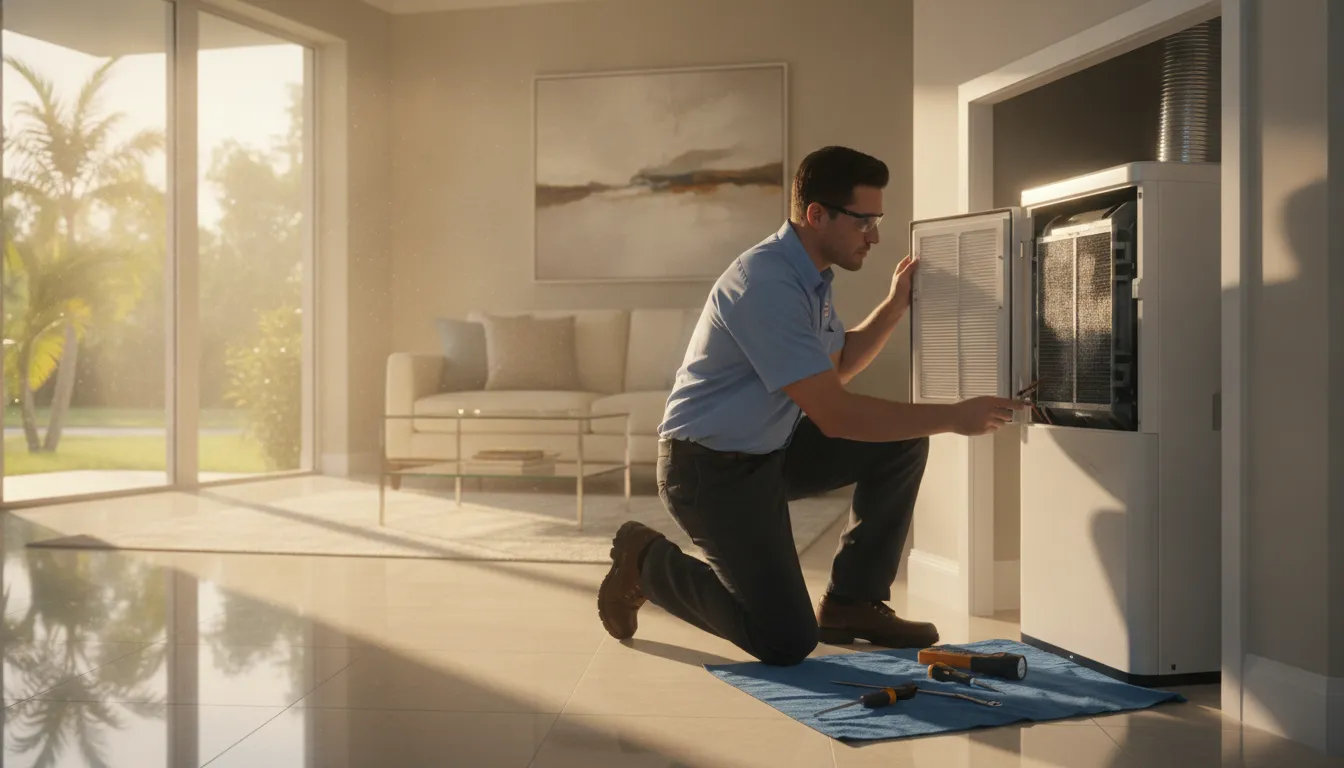
A dirty air filter is a main cause of an air conditioner blowing warm air. Over time, dust blocks the mesh and slows down the air. This blockage restricts airflow, which can make the evaporator coils freeze up. A frozen coil cannot cool your home and will stop the system from working. Federal air conditioning diagnostic guides show that restricted airflow stops proper cooling.
You should change your filter every one to three months to keep air flowing well. To check your air filter, you can follow these simple steps:
- Turn off the power to your system at the thermostat first.
- Slide the filter out of its slot in the wall or ceiling.
- Hold it up to a light to see if it is dark and blocked.
If no light passes through the mesh, you need a new filter. Dust builds up fast in Southwest Florida because of constant use. Along with DIY changes, getting a regular professional AC tune-up helps find hidden airflow blocks before they cause warm air.
The Thermostat Fan Setting
A thermostat set to the wrong mode can also cause your system to blow warm air. If the fan is set to the 'on' or 'fan' setting, the blower fan runs all the time. It will keep blowing air even when the outdoor unit is not cooling. This means warm, uncooled air will blow through your vents. According to federal energy saver guides, you should set the thermostat to 'auto' so the fan only runs when the system cools.
Checking your thermostat setting is just as easy:
- Look at the main screen on your thermostat.
- Find the switch labeled 'fan' or 'fan mode'.
- Switch the setting from 'on' to 'auto'.
Wait a few minutes and feel the vents again. The air should turn cool once the system starts a new cycle. In Southwest Florida, running the fan on 'on' also pulls humid outdoor air into your home, making rooms feel damp. Setting it to 'auto' helps keep your indoor air dry and cool.
Bad Capacitor and Compressor: The Electrical Causes
Your outdoor air conditioning unit needs a lot of power to run. This unit has two main parts: a compressor and a fan. If the compressor loses power, your system cannot cool the air. The indoor fan might keep running, but it will only blow room temperature air.
Failing capacitors and the outdoor fan
A capacitor is a small part that acts like a short-term battery. It gives the compressor a quick boost of power to help it start. If this part fails, the outdoor compressor will not turn on. But the outdoor fan motor might still run. According to the U.S. Department of Energy, a failed capacitor means the fan blows room temperature air instead of cooled air.
In Southwest Florida, extreme heat and high humidity make AC parts work much harder. Capacitors can wear out fast during a hot summer. When this part begins to fail, you might hear a low buzzing or humming sound from the outdoor unit. This is a clear sign that the compressor is trying to start but cannot get enough power. In coastal areas like Naples or Cape Coral, salty air can also corrode the metal parts, which shortens their life.
Tripped circuit breakers and blown fuses
Your air conditioner has safety switches to protect its electrical parts. A tripped breaker or a blown fuse can stop power from reaching your compressor. When this happens, the compressor stops running. The indoor unit might still blow uncooled air, which makes it feel like your AC is blowing warm air.
High outdoor heat can cause the system to draw too much electrical current. This extra load can easily trip the circuit breaker. You can check your main breaker panel to see if the switch has moved. To check the system, you can reset a tripped breaker once, but you should not do it a second time if it trips again. If the breaker keeps tripping, it means there is a short circuit or the compressor is drawing too much power.
Safe checks versus professional repair
As a homeowner, you can do a few simple checks. First, look at your main electrical panel. Second, make sure the outdoor disconnect switch is on. If these quick checks do not solve the problem, you should stop. Do not try to open the outdoor unit or touch the electrical parts yourself. The outdoor unit holds a large electrical charge that can cause severe injury.
Working with high-voltage parts is dangerous and needs professional tools. A failing capacitor or compressor needs an expert to test and replace it safely. If your system keeps tripping the breaker, you should call for urgent air conditioner service right away. Booking a regular professional AC tune-up can also help find weak electrical parts before they fail and leave you in the heat.
Low Refrigerant or a Refrigerant Leak
The role of refrigerant in heat transfer
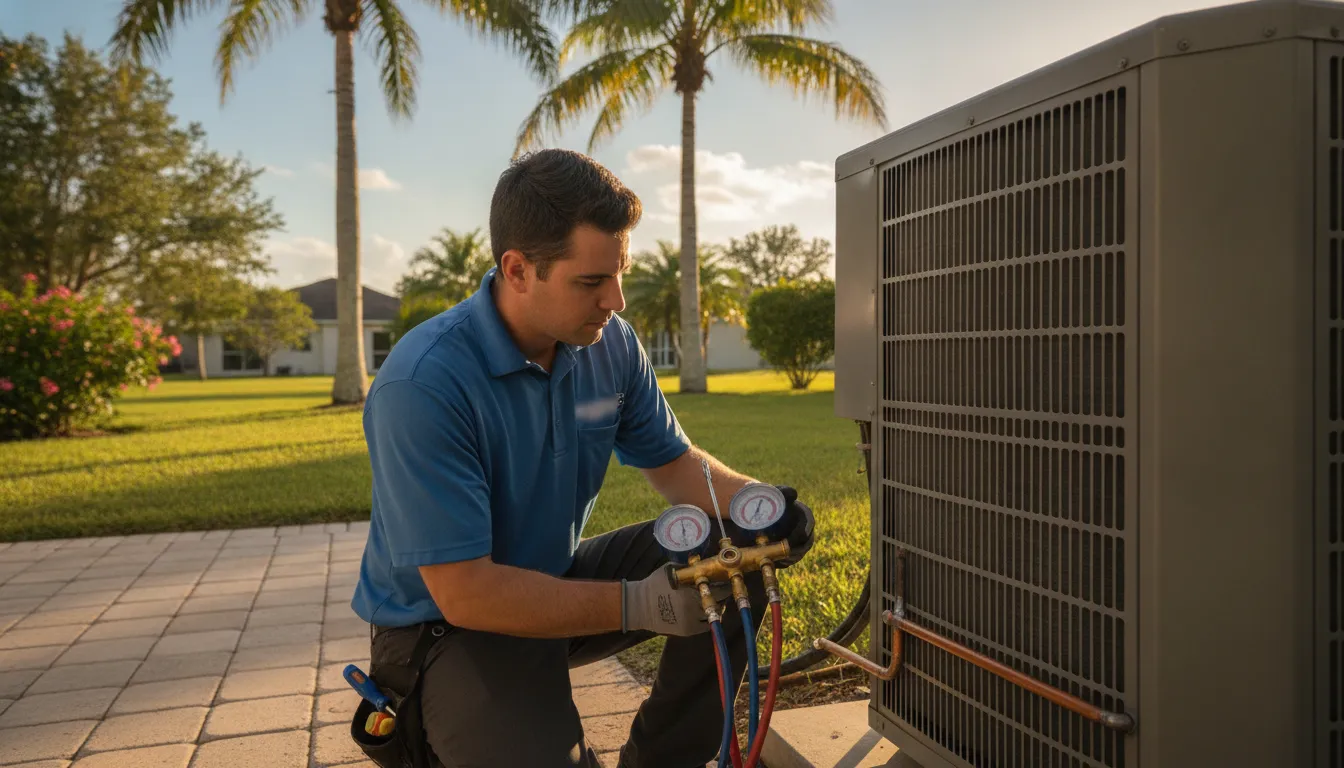
Refrigerant is the vital fluid that absorbs heat from inside your home and dumps it outside. When a leak occurs, the fluid level drops. With less refrigerant, the system loses its power to remove heat from the indoor air, which results in warm supply air.
This fluid does not get used up like gas in a car. It flows through a closed loop of copper lines. If your fluid is low, your system has a leak that must be patched.
In Southwest Florida, our humid climate and salty coastal air put extra stress on your cooling system. Salty air can corrode the copper coils over time. This damage creates tiny holes called formicary leaks.
Once these holes open, the vital gas escapes, and your system can no longer fight the heavy Florida heat. Your AC will run all day, but it will only blow warm air. Regular care is the best way to catch these small leaks before they lead to complete system failure.
The need for professional leak repair
Some people think that adding more gas is a quick fix for an AC blowing warm air. But this is not true. Simply topping up the gas without fixing the leak is a waste of money.
It also harms the environment. Federal laws regulate chemical handling to protect the air. Homeowners should never try to fix a leak on their own because only licensed technicians should handle these systems.
If your vents blow hot air, you need to book an urgent air conditioner service to find and patch the leak. Techs use tools like electronic sniffers or dyes to find the holes. After finding the leak, the tech must collect the leftover fluid safely. Then they repair the line, test the seals, and refill the system to the correct level.
An honest approach to HVAC service
Finding and fixing a leak is a detailed job. Some HVAC companies use this complex repair as a chance to upsell you a new system. They might claim that a small leak means your entire unit is dying.
They do this because their workers get paid on commission. A new sale means a bigger paycheck for them, which can lead to high pressure.
But 5 Star Air operates on a different model. Our technicians are paid hourly rather than by commission. This means they do not make more money by selling you a new unit.
They focus only on giving you an honest diagnosis. If your leak can be repaired safely, we will fix it. We will not push you to buy a new AC when a repair is the best choice.
Frozen Evaporator Coil and a Dirty Outdoor Unit
Florida homes face strong heat and wet air. This harsh weather puts high stress on your cooling system. When key parts get dirty, the system stops cooling your home well. Two common spots for dirt buildup are the indoor evaporator coil and the outdoor unit.
Why Dirty Indoor Coils Cause Warm Air
Your indoor unit has an evaporator coil that cools your home's air. Over time, dust and dirt can coat this metal coil and block airflow. A dirty coil will reduce heat transfer and put extra strain on your compressor. This extra strain can cause the coil to freeze into a block of solid ice.
If you see ice on your indoor unit, turn the system off right away. Running a frozen system can destroy the compressor, which is very costly to replace. You will need urgent air conditioner service to thaw the ice safely. A technician must then find the real cause, such as a refrigerant leak or a bad fan motor.
How a Blocked Outdoor Unit Limits Cooling
The outdoor unit releases the heat taken from inside your home. To do this job well, the system needs plenty of open space. You must keep the outdoor unit free of debris like leaves, grass, and wild weeds. When dirt blocks the unit, the system cannot dump heat, and your AC will blow warm air.
Dirty condenser coils outside also stop heat from leaving, which forces the system to run hotter and work harder. This leads to less cooling in your home. If the unit overheats, a safety switch can trip and shut off the compressor. If you notice unusual buzzing sounds from the outdoor unit, a part may be failing.
In Southwest Florida, salt air makes this problem much worse. Salt and dust form a thick crust on the outdoor metal coils. This buildup blocks heat exchange and forces the system to run longer. Regular cleanings are needed to stop this salt damage and save on your monthly power bills.
Safe DIY Steps to Clean Your AC System
You can do some simple tasks to keep your system clean and running well. First, turn off the power at the main breaker box. Use a soft brush to sweep leaves and dirt off the outdoor metal fins. You should also clear any plants within two feet of the metal box to allow good airflow.
Indoors, make sure all vents are clear. Do not try to clean the delicate coils yourself, as they bend easily. If a simple cleanup does not bring back cold air, call for professional help. An hourly-paid technician can check your system without trying to sell you a new unit.
Duct Leaks and Airflow Problems
Sometimes your cooling system works fine, but you still feel warm air. This is often because of leaks in your air ducts. If your ducts have holes, they waste cold air before it can reach your rooms. Instead, that cold air escapes into your attic or walls. At the same time, hot attic air can get inside the ducts and mix with the cold stream. This can lead to an urgent air conditioner service call when the system itself is not broken. When this happens, you will find your ac blowing warm air even if your unit is running. As energy.gov AC guidelines show, leaky ducts cause big energy losses and uneven cooling.
Why Duct Tape Fails
Many homeowners try to seal their air ducts with standard duct tape. But this is a big mistake. Standard duct tape does not hold up well over time. The glue dries out in hot spaces and the tape falls off. To seal ducts for a long time, you must use mastic sealant or foil tape. Under energy.gov AC standards, these options create a strong seal that stops air leaks. Proper sealing keeps the cold air in your rooms and keeps attic dust out.
Airflow and Humidity in Florida
In Southwest Florida, proper airflow is vital. Air conditioning is not just about temperature; it is also about control of humidity. High humidity makes systems work much harder. If your ducts are leaking, they cannot move enough cubic feet of air per minute (CFM). This means the system cannot remove the wet air from your home. The result is warm, clammy air inside your rooms. Leaks also allow wet attic air to be drawn into the system. This extra moisture can cause mold and ruin your indoor air quality.
Poor humidity control makes the air feel warmer than it is. In the hot summer months, your AC must work at its best to keep you cool. When ducts leak, you lose both cooling power and moisture control. Fixing these leaks is the best way to get your system back to peak performance.
Finding Hidden Duct Leaks
Ductwork is often hidden behind walls, in ceilings, or deep in your attic. This makes finding leaks very hard for a homeowner. You can rarely see the holes or cracks from the outside. An expert technician can use special tools to check your system's airflow. They measure the air pressure and find where the air escapes. They will seal the leaks safely and make sure your system has the right airflow. This stops your ac blowing warm air and lets you enjoy a cool, dry home.
DIY Fixes vs When to Call a Licensed Technician in Southwest Florida
You can resolve some simple AC problems on your own before you call for help. When you find your home AC blowing warm air, start with quick checks of your air filter and thermostat settings. A dirty filter blocks airflow, which can freeze up your indoor coils. Setting your thermostat fan to 'on' instead of 'auto' also blows uncooled air.
Simple cooling checks you can do
You should check your outdoor unit for grass and debris. Plants can block the unit, which lowers how well it cools. You can clear away weeds to allow proper air flow. If these quick checks do not work, a regular preventative HVAC tune-up can help find other issues before they cause system failure. Getting this help can prevent a hot house in the summer.
When to call a licensed technician
Some issues need expert care for safety and legal reasons. Only licensed technicians should handle refrigerant systems due to safety concerns and federal rules. If you hear loud noises, or if your system short cycles, you need help. You cannot fix a bad capacitor or a broken compressor on your own. Trying to do so can hurt you or ruin your unit.
If your AC stops cooling on a hot Florida night, you need help fast. We offer urgent air conditioner service to restore your comfort. Our team provides 24/7 emergency repairs with a guaranteed two-hour response time in the 239, 305, and 941 area codes. You can trust our crew because we do not use commissioned salespeople. Our technicians receive hourly pay, so they only suggest the exact repairs you need to fix your cooling problem.
Knowing what you can handle and what requires an expert helps keep your home cool and safe. Our intense local heat means that small AC problems can quickly grow worse. The table below breaks down common AC issues to show where DIY fixes stop and where professional help is needed.
| Cooling Problem | DIY Action | Professional Repair |
|---|---|---|
| Airflow issues | Swap a dirty air filter | Seal leaks or clean ducts |
| Thermostat settings | Set fan to auto, check battery | Calibrate or replace unit |
| Outdoor unit blockage | Clear leaves and grass | Clean coils and check motor |
| Low refrigerant | Do not attempt (pro only) | Find leak and add refrigerant |
| Electrical failure | Reset tripped breaker once | Replace bad capacitor or compressor |
The benefits of timely maintenance
Ignoring minor cooling issues can lead to major damage over time. Routine care keeps your system running well in our hot climate. You should address warm air issues quickly to avoid high power bills and costly equipment replacement. A healthy AC ensures your comfort through the humid Florida summer.
If your AC is still blowing warm air, get it checked before the heat takes over. Book a fast AC repair online and our honest, hourly-paid technicians will restore your cool air without pushing a new unit.
Frequently Asked Questions
Should I turn off my AC if it is blowing warm air?
Yes, you should turn off your air conditioner right away if it is blowing warm air and icing over. Running a frozen system can cause lasting damage to your compressor. According to the U.S. Department of Energy, turning the system off prevents costly compressor failure and lets the ice melt safely before help arrives.
How do I reset my AC when it is not blowing cold air?
To reset your air conditioner, first turn the system off at the thermostat. Next, find your main breaker box and locate the switch for your AC. Flip the switch completely off, then flip it back to on. Wait thirty minutes before turning the thermostat back to cool. According to the U.S. Department of Energy, this can safely restart a compressor after a tripped breaker.
Why is my AC blowing lukewarm air instead of cold air?
Your AC may blow lukewarm air if the thermostat fan setting is set to on instead of auto. In the on setting, the indoor fan runs all the time even when the outdoor unit is off. This pushes uncooled air through your vents. According to the U.S. Department of Energy, switching the setting back to auto ensures the fan only blows when the system is actively cooling.
Is an AC blowing hot air considered an emergency in Florida?
Yes, an air conditioner blowing hot air can quickly become a health emergency during hot summer days. This is very true for young children and older adults. According to the U.S. Department of Energy, home cooling systems are vital for keeping safe indoor heat and humidity levels in warm regions. If your system stops cooling, seek professional repair right away.
Ready to Schedule Fast AC Repair in Southwest Florida?
Leaving your air conditioner broken in the hot Florida climate is always a bad recipe. It quickly leads to high utility bills, frozen indoor coils, and expensive mold growth. Getting a licensed technician to inspect your system right away prevents minor electrical faults from completely breaking your costly compressor unit. Our local team of hourly techs is ready to restore your cool comfort. We provide honest, repair-first diagnostics with absolutely no high-pressure sales pitches or hidden fees. We understand how much you need reliable cool air in our warm seaside climate.
Ready to get cool again? Book your AC repair online or call us today at (239) 282-2222 to request emergency 24/7 AC repair.