Mitsubishi Mini Split Installation Cost Florida Guide
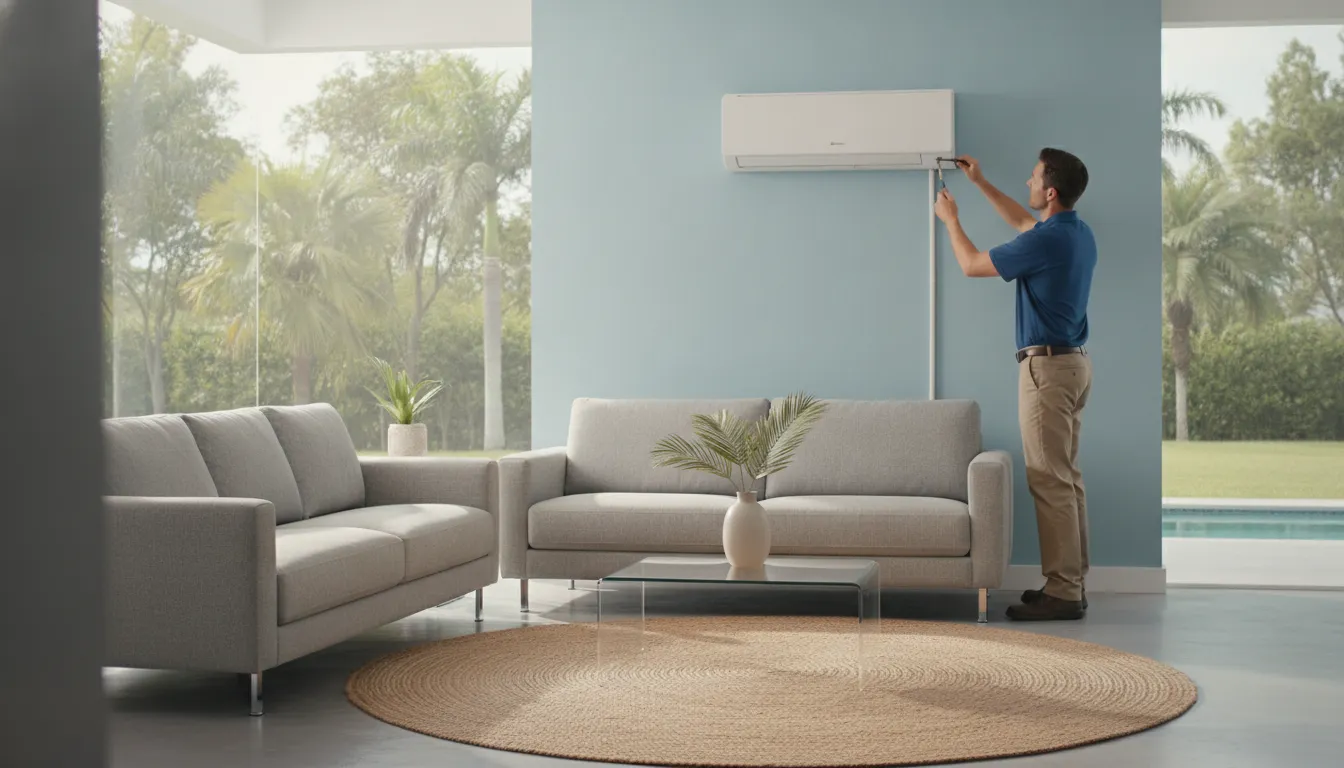
Florida heat exposes the weaknesses of one-size-fits-all cooling. A ductless mini-split can add dependable comfort to a converted garage, new addition, bedroom, or other area where extending ductwork would be expensive. It can also reduce energy waste caused by leaky ducts, which may account for up to 30 percent of cooling energy loss in poorly maintained systems, according to HVAC.com.
The mitsubishi mini split installation cost florida homeowners should expect depends on the system's capacity, number of zones, electrical needs, installation complexity, and the equipment selected. A professional evaluation is the best way to receive an accurate, upfront price and protect the system's efficiency and warranty.
Mitsubishi equipment often carries a higher initial price because of its efficiency and engineering. But the right system should be chosen for the home's layout and comfort needs, not a sales quota. Understanding why these systems fit Florida homes is the first step toward comparing options fairly.
What Makes Mitsubishi Mini Splits a Smart Choice for Florida Homes?
Florida homes have different cooling needs from room to room. A sun-filled bonus room, enclosed lanai, garage, or older addition may stay uncomfortable even when the central air conditioner is running. A Mitsubishi mini split can condition that space without extending an entire duct network, making it a practical option for homes where new ductwork would be expensive or disruptive. Read our Mitsubishi mini split installation guide for an overview of the installation process.
Ductless cooling avoids common ductwork losses
A mini split uses an outdoor unit connected to one or more indoor air handlers by refrigerant lines. Central AC sends conditioned air through ducts, while a ductless system delivers cooling directly into each selected area. Poorly sealed or maintained ducts can account for as much as 30 percent of cooling energy loss, according to HVAC.com. Eliminating that pathway can be especially useful in Florida homes with aging ductwork, limited attic access, or spaces that were never connected to the central system.
Inverter technology supports steady comfort
Instead of repeatedly switching between full output and no output, Mitsubishi inverter-driven compressors adjust their speed as the home's demand changes. That approach can reduce temperature swings and help the system maintain more consistent comfort during long, humid Florida cooling cycles. Ductless heat pumps are estimated to be two to four times more efficient than conventional HVAC systems, although actual performance depends on the model, sizing, controls, and installation.
Mitsubishi's Hyper-Heating INVERTER, or H2i, technology is designed to maintain heating performance in very cold conditions, down to -13 degrees Fahrenheit. That capability is more than most Florida homeowners need, but it reflects the system's broad operating range. Some Mitsubishi models also reach SEER2 ratings up to 33.1, while sound levels can be as low as 19 decibels, based on the reviewed product information.
Zoned cooling puts comfort where it matters
With a single-zone system, you can focus cooling on one room or addition. A multi-zone setup connects several indoor units to one outdoor unit, allowing different areas to be controlled independently. That means you are not cooling every room equally when only part of the home is occupied. Each added zone increases equipment and installation requirements, so professional sizing matters. Proper installation is also essential to preserve efficiency and support the system's long-term performance and warranty coverage.
Average Mitsubishi Mini Split Installation Cost Florida Prices by System Size
For a Mitsubishi mini split installation in Florida, a realistic budget depends on the number of zones, equipment capacity, home layout, and electrical requirements. Current published estimates put a single-zone Mitsubishi system at approximately $3,200 to $7,000 installed, while a multi-zone system commonly ranges from $7,000 to $16,000 or more. A Florida-specific estimate also places ductless mini split installation around $3,000 to $7,000+, so unusually low quotes deserve careful review of what is actually included.
Single-zone Mitsubishi system: $3,200 to $7,000 installed
A single-zone system serves one primary area, such as a bedroom, home office, garage, or addition. The equipment alone may cost about $1,800 to $3,600, with the balance covering refrigerant-line installation, mounting, commissioning, electrical work, and labor. The final price can increase when the outdoor unit needs a long line set, the wall requires difficult access, or the installation needs a dedicated electrical circuit.
For comparison, one Florida-specific guide puts ductless mini split installation in the range of $3,000 to $7,000 or more. ACDirect reports $3,200 to $7,000 for a single-zone Mitsubishi system. These figures are useful budgeting ranges, not a substitute for a site-specific quote. Source: ACDirect Mitsubishi cost guide.
Multi-zone Mitsubishi system: $7,000 to $16,000+
Multi-zone systems connect multiple indoor air handlers to one or more outdoor units. More indoor units mean more equipment, line-set routing, controls, and commissioning time. A two- or three-zone design may fit within the lower part of the range, while larger homes, longer runs, and complex layouts can push the project above $16,000. The investment provides separate temperature control for rooms that do not all need the same schedule or setpoint.
Estimated cost by system capacity
BTU capacity offers another way to compare installation budgets. Filterbuy reports these fully installed ranges:
- 12,000 BTU: $1,500 to $3,100, including approximately $900 to $2,000 for equipment and $600 to $1,100 for labor.
- 18,000 BTU: $1,600 to $2,200 installed, depending on equipment and installation conditions.
- 24,000 BTU: $2,150 to $2,850 installed, with higher equipment and labor needs than smaller systems.
These general mini split figures may be lower than Mitsubishi-specific Florida pricing, particularly when premium equipment, permits, electrical upgrades, or challenging construction are involved. Ask for the equipment model, labor scope, accessories, and required upgrades to be listed separately so you can compare quotes fairly. Source: Filterbuy mini split cost data.
Single-Zone vs Multi-Zone: Finding the Right Mitsubishi System for Your Home
The right Mitsubishi configuration depends less on the number of rooms in your home than on how you use them. A single-zone system can solve one specific comfort problem without the cost and complexity of conditioning the entire house. A multi-zone system connects several indoor air handlers to one outdoor unit, giving different areas their own temperature settings.
| System type. | Typical coverage. | Typical installed cost. | Best fit. |
|---|---|---|---|
| Single-zone. | One room or area. | $3,200-$7,000 | Room additions, garages, offices, or one problem area. |
| Multi-zone, 2-3 zones. | Several rooms or areas. | $6,500-$11,500, plus about $500-$2,000 in labor per zone depending on the installation. | Whole-home comfort with separate temperature control. |
These are planning ranges, not a substitute for a home-specific quote. The final Mitsubishi mini split installation cost in Florida can change with equipment capacity, electrical requirements, line-set routing, wall access, and the distance between indoor and outdoor components. Each added zone also means additional equipment and more involved wiring, which increases installation cost. HVAC.com explains how zone count affects ductless installation pricing.
When to choose a single-zone system
Choose single-zone when one part of the home needs dedicated cooling. This is often the practical option for a converted garage, new addition, detached workspace, enclosed lanai, or bedroom that stays warmer than the rest of the house. You pay to solve the actual comfort issue rather than extending ductwork or adding capacity for rooms that do not need it.
A single-zone design is also easier to plan and usually simpler to install. That can make it a sensible first step when you want to improve one area now and evaluate other rooms later. Proper sizing still matters, especially in Florida, where humidity and heat load affect performance.
When to choose a multi-zone system
Multi-zone is the stronger fit when several rooms need conditioning but do not share the same comfort preferences or schedules. Each indoor unit can provide individualized temperature control for its zone, so a frequently used living area does not have to follow the same setting as a guest room or home office.
Because Mitsubishi multi-zone systems can scale for larger Florida homes, they can provide a coordinated alternative to installing separate outdoor units for every room. The tradeoff is a higher initial investment and more installation planning. A careful layout review should confirm that the outdoor unit, refrigerant lines, electrical service, and indoor head locations can support the proposed zones.
5 Factors That Affect Your Mitsubishi Mini Split Installation Cost
The price of a Mitsubishi mini split installation depends on more than the equipment box. Your home's cooling load, layout, electrical service, and local requirements all shape the final estimate. Understanding these five factors makes it easier to compare quotes and identify what is included.
1. BTU capacity
BTU capacity measures how much heating or cooling a system can deliver. A small system for one bedroom generally costs less than a higher-capacity unit designed for a large living area. Larger BTU ratings usually require more equipment and can carry a higher purchase price. The correct size should be based on the room, insulation, windows, sun exposure, and other load factors, not simply the square footage.
2. Number of zones
Each zone adds an indoor air handler, refrigerant connections, controls, and installation time. A single-zone system may suit a converted garage or room addition, while a multi-zone system can serve several areas independently. More zones increase the equipment and labor portion of the project, although they can provide more precise temperature control. A professional assessment helps determine whether the added comfort justifies the additional cost.
3. Installation complexity
The path between the indoor heads and outdoor condenser affects labor. Straightforward line-set routing through an accessible wall is usually simpler than routing around finished spaces. Line-hide, difficult wall construction, long refrigerant runs, limited attic access, or a multi-story layout can all add time and materials. As documented by HVAC.com, specialized applications that require extra labor increase the project cost. For a related breakdown, see our guide to AC unit installation labor costs.
4. Electrical upgrades
Your home's existing electrical panel and dedicated circuits may not be ready for the selected system. If an electrician must add a circuit, replace a breaker, or make another service adjustment, Budget Heating estimates electrical upgrades at about $200 to $500. The actual amount depends on the panel, wiring distance, and work required. This cost should appear as a separate line item in a clear proposal.
5. Permits and project fees
Permits help ensure the installation meets local building and electrical requirements. Budget Heating lists permits at roughly $100 to $300, with decorative line-hide potentially adding another $100 to $300 when it is needed. Fees vary by jurisdiction and project scope, so ask whether permit costs, inspections, materials, and cleanup are included before approving the work. A detailed estimate should identify these charges instead of leaving them as surprises.
Mitsubishi vs Other Mini Split Brands: Is the Premium Worth It?
Mitsubishi systems generally cost more upfront than lower-rated mini split options, but the price difference can reflect meaningful performance advantages. The right comparison is not only the equipment invoice. It is the combination of comfort, operating efficiency, sound, installation quality, and expected service life.
Where Mitsubishi stands out
Mitsubishi's inverter-driven compressors adjust speed incrementally instead of repeatedly switching fully on and off. That approach can maintain more consistent indoor temperatures while using up to 40% less energy than conventional systems, according to National Air Warehouse's technical overview. Ductless heat pumps can also be 2 to 4 times more efficient than traditional HVAC systems, although actual savings depend on the home, settings, insulation, and usage.
Efficiency is not the only consideration. Select Mitsubishi models reach SEER2 ratings up to 33.1, and sound levels can be as low as 19 decibels. That quieter operation can matter in bedrooms, offices, and Florida rooms where a louder system would be distracting. Hyper-Heating INVERTER, or H2i, is another differentiator. It is designed to maintain efficient heating performance in outdoor temperatures down to -13 degrees Fahrenheit, which is more capability than most Florida homeowners need, but useful for year-round flexibility.
Comparing lifetime value, not just purchase price
A less expensive brand may make sense when the installation is straightforward and the equipment meets your comfort goals. However, choosing solely by the lowest bid can overlook energy use, noise, temperature swings, and the cost of an installation that is not properly sized or commissioned. Professional installation is especially important because setup quality affects system efficiency and long-term performance.
Equipment pricing has also shifted across the industry. ACDirect reports that the R-410A phase-down and related manufacturing changes pushed equipment prices up approximately 8% to 14% from 2023 levels across many product lines. That market-wide increase is not unique to Mitsubishi, so comparing current, itemized proposals is more useful than relying on older online prices.
For homeowners evaluating mitsubishi mini split installation cost florida, the premium may be worthwhile when quiet operation, precise zoning, and high efficiency are priorities. Review the available configurations in our Mitsubishi mini split systems and services guide, then compare total installed cost and expected operating value rather than equipment price alone.
Get Transparent Mitsubishi Mini Split Installation Cost Florida Pricing With 5 Star Air
What you pay for a Mitsubishi system should be clear before work begins. 5 Star Air uses an upfront pricing process that explains the equipment, installation requirements, and expected labor without tacking on surprise charges later. That matters when comparing quotes for a Florida home, because the final price can change with zone count, electrical needs, access, and routing complexity.
Our approach is different from a commission-driven sales model. 5 Star Air's sales staff are not paid to steer homeowners toward a higher-priced replacement or unnecessary add-ons. Recommendations are based on the home's layout, comfort concerns, and the repair or installation option that best fits the situation. The goal is a system that solves the problem, not a larger invoice.
Upfront quotes without hidden fees
Before installation, you should know what is included and which site conditions could affect the scope. A transparent quote gives you room to compare options and make a decision without pressure. It also helps separate legitimate installation requirements from upgrades that may not add meaningful value. If an existing system can be repaired safely and reliably, a repair-first evaluation may be more appropriate than an immediate replacement.
Technicians focused on the work, not the upsell
5 Star Air's technicians are hourly-paid, so their recommendations are not tied to equipment commissions or sales quotas. That keeps the conversation centered on proper sizing, careful installation, and long-term performance. Professional installation is especially important for Mitsubishi equipment, since workmanship affects efficiency and system longevity.
For a closer look at the local context, review our mini split installation Cape Coral guide, then explore our full range of HVAC services. A clear evaluation is the best starting point for an honest Mitsubishi installation decision.
Frequently Asked Questions
How much does a Mitsubishi mini split installation cost in Florida?
Pricing depends on system size, zone count, equipment efficiency, electrical work, and installation complexity. Published Florida estimates commonly place a single-zone installation around $3,000 to $7,000 or more, while multi-zone projects can range from $7,000 to $16,000 or more. These figures are planning ranges, not a substitute for a home-specific quote. Source: CoolToday and ACDirect, as cited in the article research.
Is a single-zone or multi-zone system better for my home?
A single-zone system is often practical for one bedroom, addition, garage, or other isolated area. A multi-zone system can serve several rooms from one outdoor unit and lets occupants set different temperatures. It also costs more because each added zone requires additional equipment, connections, and labor. The right choice depends on your layout and which areas need independent comfort control.
What affects the labor cost of a mini split installation?
Labor is shaped by the distance between the indoor and outdoor units, wall access, line-set routing, mounting requirements, electrical capacity, and the number of zones. Difficult routing or structural modifications take more time and can increase the project total. A professional assessment should identify these conditions before installation begins rather than adding them unexpectedly later.
Why can a Mitsubishi system cost more than another mini split brand?
Some Mitsubishi models carry a higher upfront price because of their efficiency ratings, controls, and system features. The equipment should be evaluated alongside installation quality, expected operating costs, comfort goals, and warranty requirements. A lower purchase price is not necessarily the better value if the system is poorly sized or installed.
How does 5 Star Air provide a more transparent quote?
5 Star Air reviews your home's layout and cooling needs, explains the equipment and labor included, and presents pricing upfront. Its sales approach is not commission-driven, so recommendations are based on the system your home needs rather than a sales quota. That gives Florida homeowners a clearer basis for comparing options before approving the work.
A clear consultation can help you compare system options, zone needs, and installation factors before choosing a setup. 5 Star Air provides transparent pricing so you can make an informed decision without pressure or hidden fees. Call 5 Star Air at (646) 251-1292 to schedule your free consultation for Mitsubishi mini split installation in Southwest Florida.